How to identify genuine craftsmanship in a world of mass-produced “perfection.”
Most shoppers believe that a higher thread count always signifies a better fabric. However, in the world of authentic Indian handloom, this is often a misconception. While machine-made sheets prize high numbers, handwoven textiles prize the “soul” of the weave. Therefore, understanding the true markers of quality is essential for any deliberate connoisseur.
Why Handloom Texture Matters
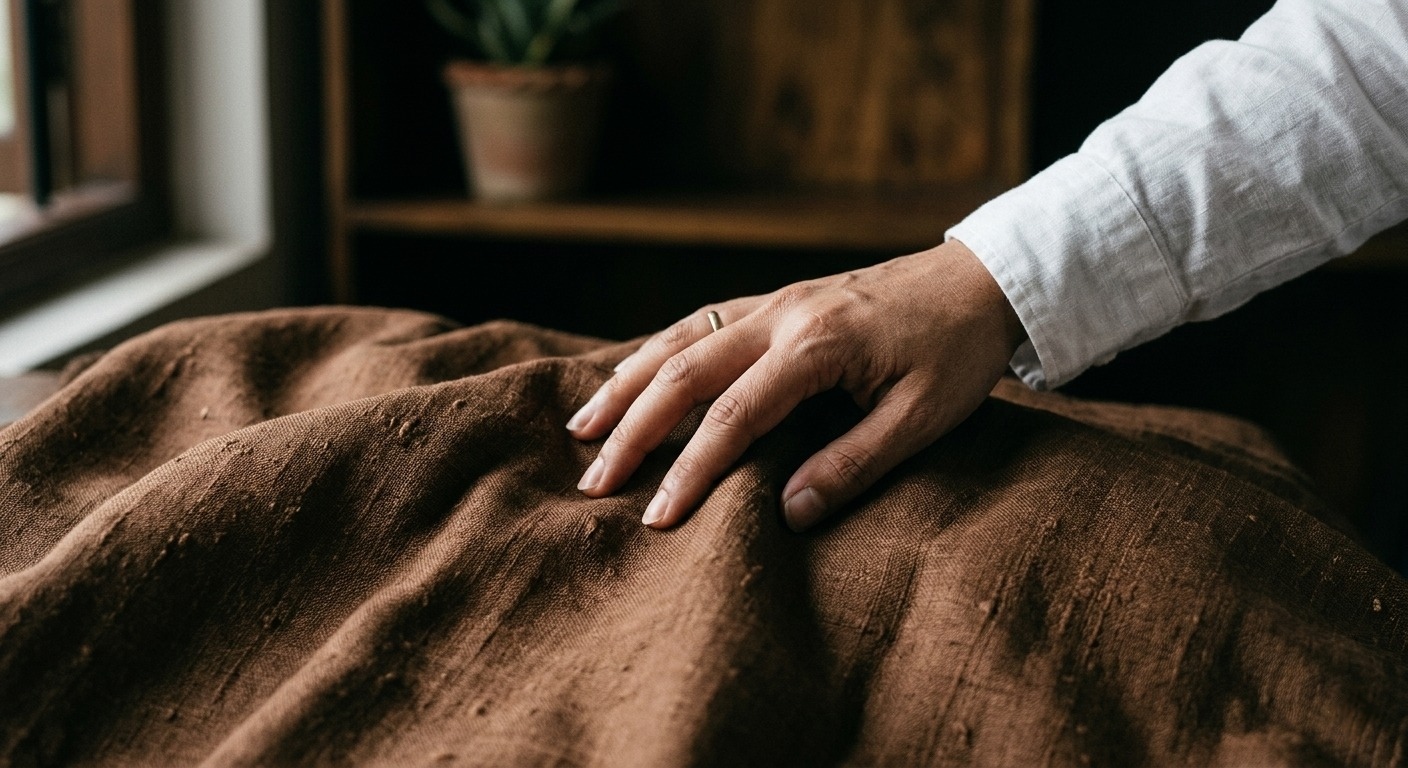
First of all, we must look at the texture. A powerloom produces a surface that is surgically smooth and uniform. In contrast, a handloom fabric features subtle “slubs”—tiny, intentional knots where the weaver joined the thread. Because these variations exist, the fabric breathes better and reflects light with a rich, organic depth.
Furthermore, these slubs act as a signature of the artisan. If you find a fabric that is perfectly flat and slick, it likely lacked the human touch. Consequently, the first step to identifying quality is learning to love the “flaw.”
Expert Quality Tip
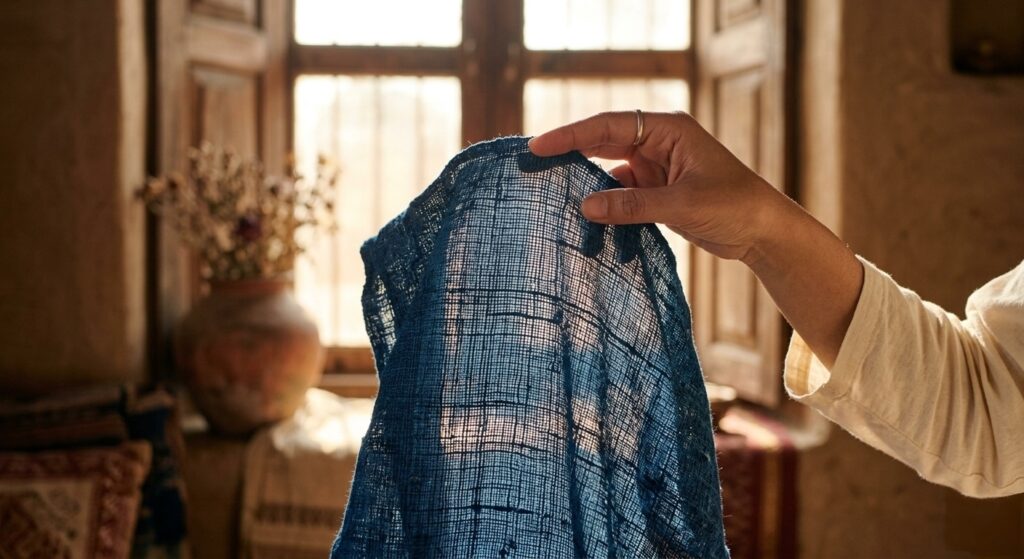
When examining a garment, hold it up to a natural light source. If the light filters through in a perfectly repeating grid, it is likely a machine weave. On the other hand, handloom will show a beautiful, slightly irregular “sieve” effect.
Decoding the Strength of the Weave
In addition to texture, the strength of the selvedge (the finished edge) is a major quality marker. A machine-made edge is often stiff or heat-singed to prevent fraying. Alternatively, a hand-turned selvedge is soft yet incredibly durable. This is because the weaver maintains a consistent, human tension that a high-speed motor simply cannot replicate.
Moreover, high-quality handloom matures over time. For instance, a genuine Vuna piece will actually become softer and more lustrous after its first few washes. This happens because the natural fibers—like long-staple Indian cotton—settle into their permanent shape.
Moving From Price to Value
To summarize, price tags can be misleading, but the fabric never lies. As a result of choosing hand-processed textiles, you are investing in a garment that lasts for decades rather than seasons. Clearly, understanding the hidden journey of a handloom piece is what separates a trend-follower from a true collector.
By the same token, your choice supports a legacy of Sustainable Indian Craftsmanship. Finally, remember that quality is not just about how a fabric looks on a shelf—it is about how it feels against your skin and how it honors the hands that made it.
The Story Becomes Fully Yours
Recognizing genuine handloom is the first step. The second is knowing that the label on the tag matches the truth of the fabric. In our next guide, we will decode what a Handloom Mark actually guarantees and how to verify a GI Tag for authentic textiles.
[…] how fabric is made is only the first step. The next question arrives naturally: How do you know if it was made well? That is exactly where we go […]

Leave a Reply