
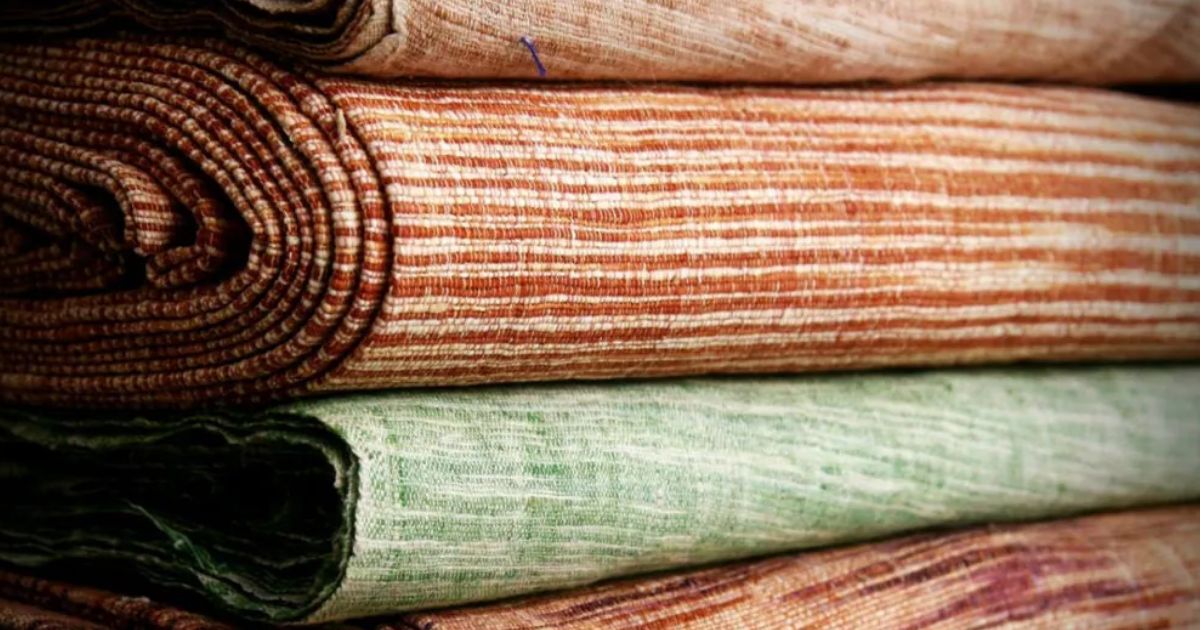
Before you ask if Indian textiles are beautiful — ask if they are brilliant. The answer, it turns out, is both.
There is a reason your grandmother never complained about the heat in her cotton saree. She was not simply tolerating the summer — she was dressed for it, in a fabric that had been engineered by centuries of lived experience in the same climate you are standing in right now.
Indian textiles are not beautiful accidents. The breathability, the weight, the way a well-chosen fabric settles against your skin on a humid afternoon — none of that is decorative. It is deeply, specifically functional. And most of us were never told.
That changes here.
The Climate Intelligence of Natural Fibers
India’s textile heritage did not develop in a vacuum. It developed in 45-degree summers, coastal monsoons, dusty plains, and cold mountain winters. Every traditional fiber — cotton, silk, wool, linen — was selected and refined in direct conversation with its environment.
Cotton, particularly handspun Khadi, is the clearest example. The spinning process on a charkha preserves the natural air pockets within the cotton fiber. These microscopic spaces do something a polyester blend simply cannot: they allow your skin to breathe. Sweat evaporates. Body temperature regulates. You do not overheat.
Silk, by contrast, is a natural protein fiber with an extraordinary ability to adapt. It keeps you warm when the air is cool and remains surprisingly light when the temperature rises — a property that synthetic “silky” fabrics replicate in appearance but never in function.
Wool textiles from regions like Kullu or Kashmir — Pashmina, Shahtoosh — are spun so finely that the insulating air trapped within the weave provides warmth without weight. A well-made woolen shawl does not just look elegant at a winter wedding. It works.
Did You Know? Khadi’s unique breathability is a direct result of hand-spinning, not just the fiber itself. Machine-spun cotton compresses the fiber, eliminating the air pockets that make Khadi so effective in Indian summers. When you choose handspun over mill-made, you are choosing a fabric that was, quite literally, made for your climate.
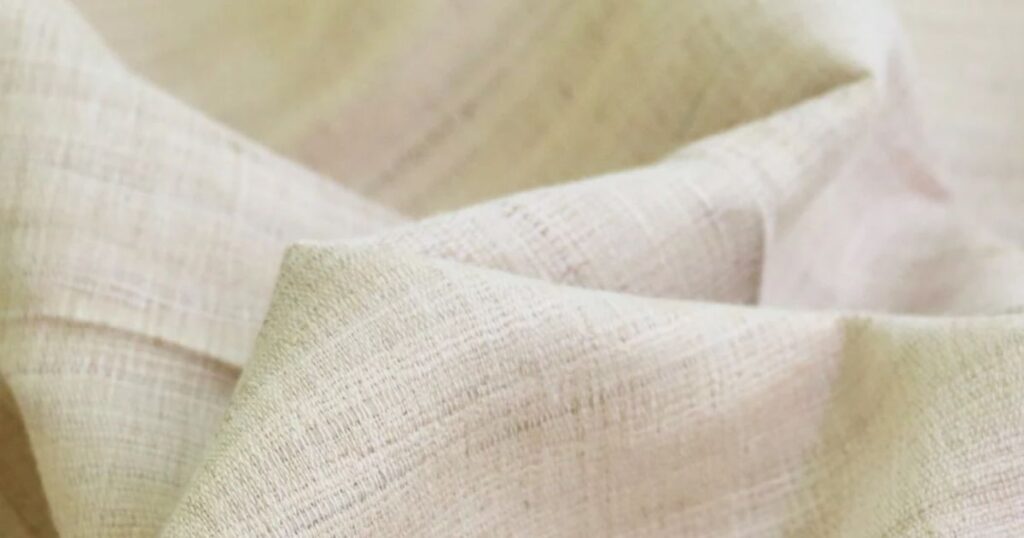
Durability: The Quiet Argument Against Fast Fashion
A well-woven Indian handloom textile does not age the way a fast-fashion garment does. It does not pill, it does not lose its structure, and it does not quietly fall apart after twelve washes.
The reason is structural. In handloom weaving, the warp and weft threads interlace under tension controlled entirely by the weaver. That human calibration creates a fabric with remarkable tensile strength — the threads hold their position without stressing each other. Industrial powerlooms, optimizing for speed, cannot replicate that level of thread relationship.
A Kanjivaram silk saree, properly cared for, is not a once-in-a-lifetime purchase. It is a multi-generational one. Families pass them down. The saree outlasts the season, the trend, and often, the decade.
This is not sentiment. This is engineering.
Did You Know? The gold and silver zari thread woven into Banarasi and Kanjivaram sarees is not merely ornamental. Historically, real zari used actual silver coated in gold. Families would sometimes unravel older sarees to recover the precious metal thread. The weave was built to last long enough for that to be worth doing.
Skin-Friendliness: What Your Body is Absorbing All Day
This is the conversation that synthetic textiles would prefer you never have.
Every fabric you wear is in constant contact with your skin for hours at a time. The fiber, the dye, the finish — all of it interacts with your body’s largest organ. This matters.
Natural Indian fibers — unbleached cotton, raw silk, plant-dyed wool — are inherently low in chemical load. They do not require the intensive finishing treatments that synthetic fabrics need to mimic properties that natural fibers simply come with.
Natural dye traditions, particularly in regions like Rajasthan and Gujarat, used plant-based dyes for thousands of years — indigo, turmeric, pomegranate rind, madder root. Many of these have documented antimicrobial and anti-inflammatory properties. Indigo, in particular, has a long history of use in traditional medicine for its skin-soothing qualities.
This does not mean every Indian textile is naturally dyed today — it is not, and transparency matters here. But when you find fabric that is, you are not just wearing a color. You are wearing a relationship between plant and skin that is thousands of years old.
Did You Know? Turmeric, one of India’s oldest natural dyes, contains curcumin — a compound widely studied for its anti-inflammatory and antimicrobial properties. Historically, turmeric-dyed cloth was used for wound dressings in Ayurvedic practice. The same compound that colors the fabric is the one that protects your skin.
What You Now Know That Most People Don’t
Indian textiles earned their place in this country’s life not because they were traditional. They earned it because they were correct — correct for the climate, correct for the skin, correct for a life lived in real conditions.
The next time someone suggests that natural handloom fabrics are an ethnic choice or an aesthetic preference, you now have an answer. They are a functional choice. They are the result of centuries of material intelligence refined in exactly the environment you are living in.
That is not nostalgia. That is expertise.
Leave a Reply