-
How a Handloom Saree Is Made: The Hidden Journey Behind Every Thread
 Read more: How a Handloom Saree Is Made: The Hidden Journey Behind Every Thread
A handloom saree often enters our lives folded neatly on a shelf, draped at a wedding, or passed down through generations. By the time we see it, the story feels complete. But the most remarkable part happened long before the saree existed. Long before the first motif appeared. Long before the border found its shape.…
-
Your Skin Already Knows: The Functional Case for Indian Textiles
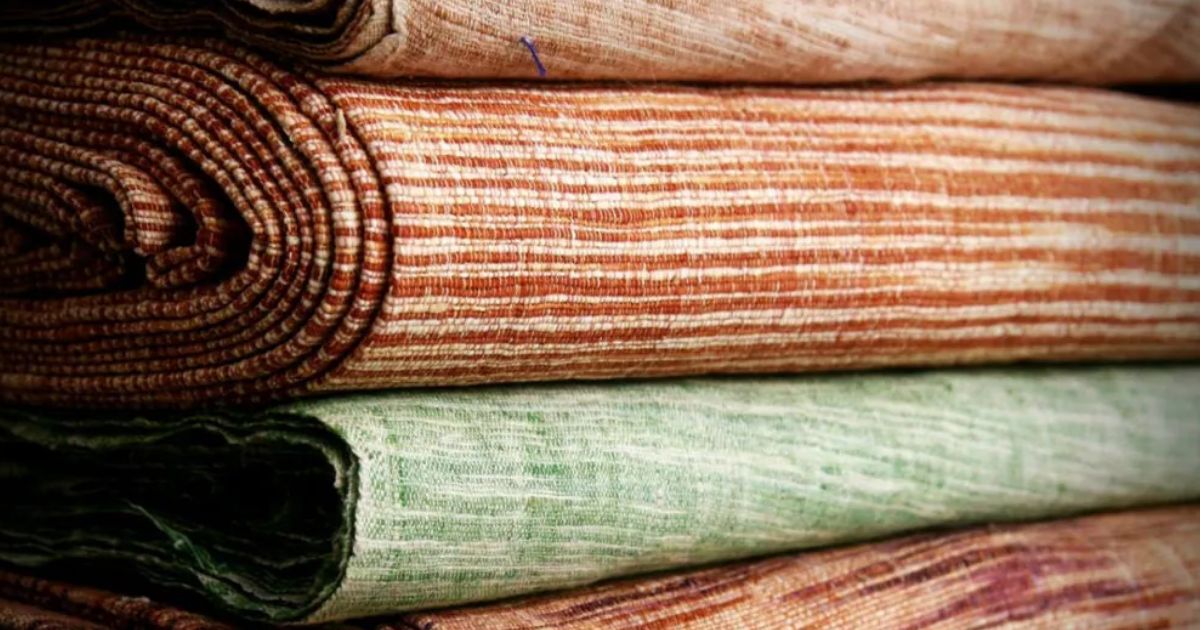
Read more: Your Skin Already Knows: The Functional Case for Indian TextilesBefore you ask if Indian textiles are beautiful — ask if they are brilliant. The answer, it turns out, is both. There is a reason your grandmother never complained about the heat in her cotton saree. She was not simply tolerating the summer — she was dressed for it, in a fabric that had been…
-
Understanding Labels & Certifications
Read more: Understanding Labels & CertificationsThere is something deeply personal about a legal stamp pressed onto the reverse side of a woven fabric. In fact, it carries the exact weight of a human signature. Today, clever power loom imitations increasingly crowd the modern marketplace. Consequently, learning how to decode these small institutional markers becomes your ultimate act of discernment. How…
-
Beyond the Glitz: A Conscious Guide to Wedding Guest Styling
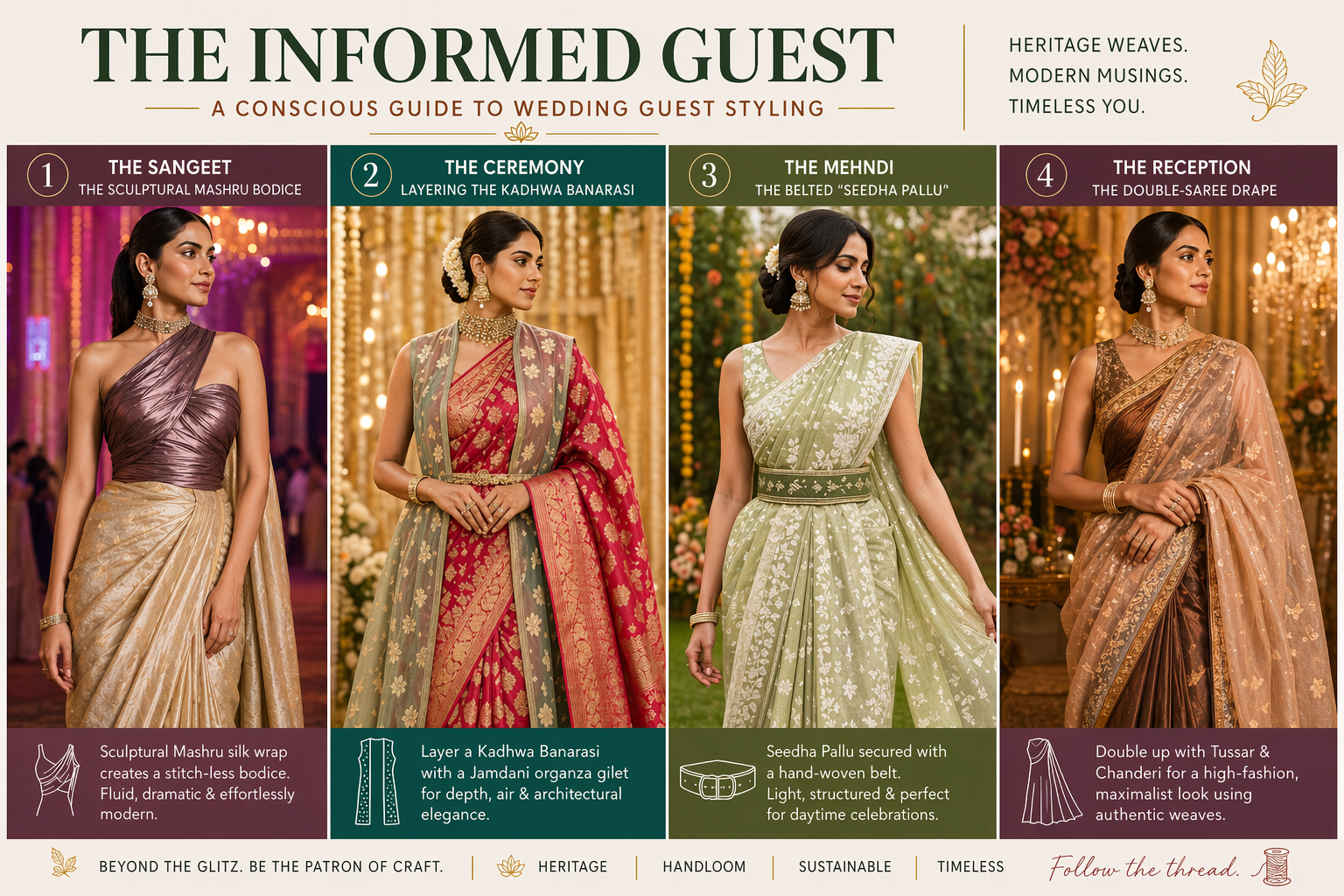
Read more: Beyond the Glitz: A Conscious Guide to Wedding Guest StylingThe Indian wedding season often feels like a race toward the loudest silhouette—a sea of heavy mirrors, synthetic net, and fleeting trends. But there is a quieter, more profound way to stand out. In 2026, the “Informed Guest” is looking toward the longevity of the handloom. When you choose a heritage weave, you aren’t just…
-
5 Ways to Style Your Handloom Saree for the 2026 Workday
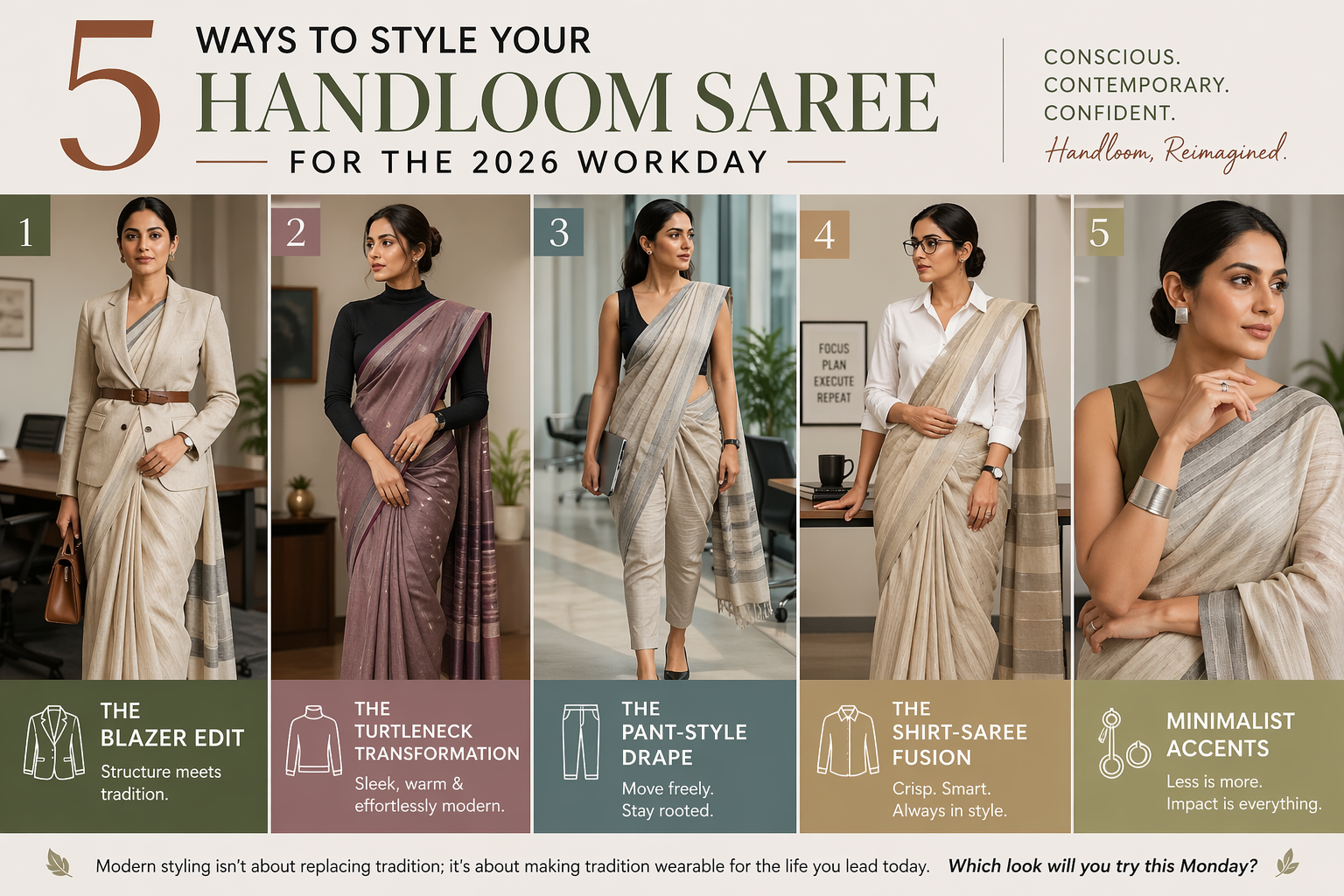
Read more: 5 Ways to Style Your Handloom Saree for the 2026 Workdaymodern handloom saree styling
-
Micro-trends vs timeless fashion – what should you invest in?
Read more: Micro-trends vs timeless fashion – what should you invest in?Discover how conscious choices and brands like Vuna promote meaningful, sustainable style. Micro-Trends vs Timeless Fashion. The world of fashion is a very hectic place and trends shift within a short period. Social media is always bringing out new styles, aesthetics and must have items and you can find yourself feeling like you have to…
-
The Story Behind Handloom: More Than Just Fashion
Read more: The Story Behind Handloom: More Than Just FashionMore than a cloth: handloom is a tale of tradition, culture and human affections. Find out why it does matter in the present fast-fashion world. Handloom is an exception in a fast-changing fashion world with trends that keep changing. It is more human, contemplative and gradual. Handloom is not fabric but a tale with patience,…
-
Cost per wear and investment pieces
Read more: Cost per wear and investment piecesA new research shows that labelling clothes with cost per wear could curb fast fashion.Buying fewer, better quality garments that last years is what cost per wearing investment pieces means. What is cost per wear Cost per wear (CPW) means measuring the true value of a garment.It considers how often you wear an item over…
-
Handloom vs Powerloom: What You’re Really Wearing
Read more: Handloom vs Powerloom: What You’re Really WearingYou don’t notice it at first. Two sarees can look almost identical. The same color, the same pattern, the same sheen under light. One might even cost less, feel lighter, and seem easier to carry. And yet, they are not the same. Somewhere between the threads, there is a difference you can’t immediately see —…
-
Cloth That Remembers: How Banarasi, Ajrakh & Chikankari Became Part of India’s Identity
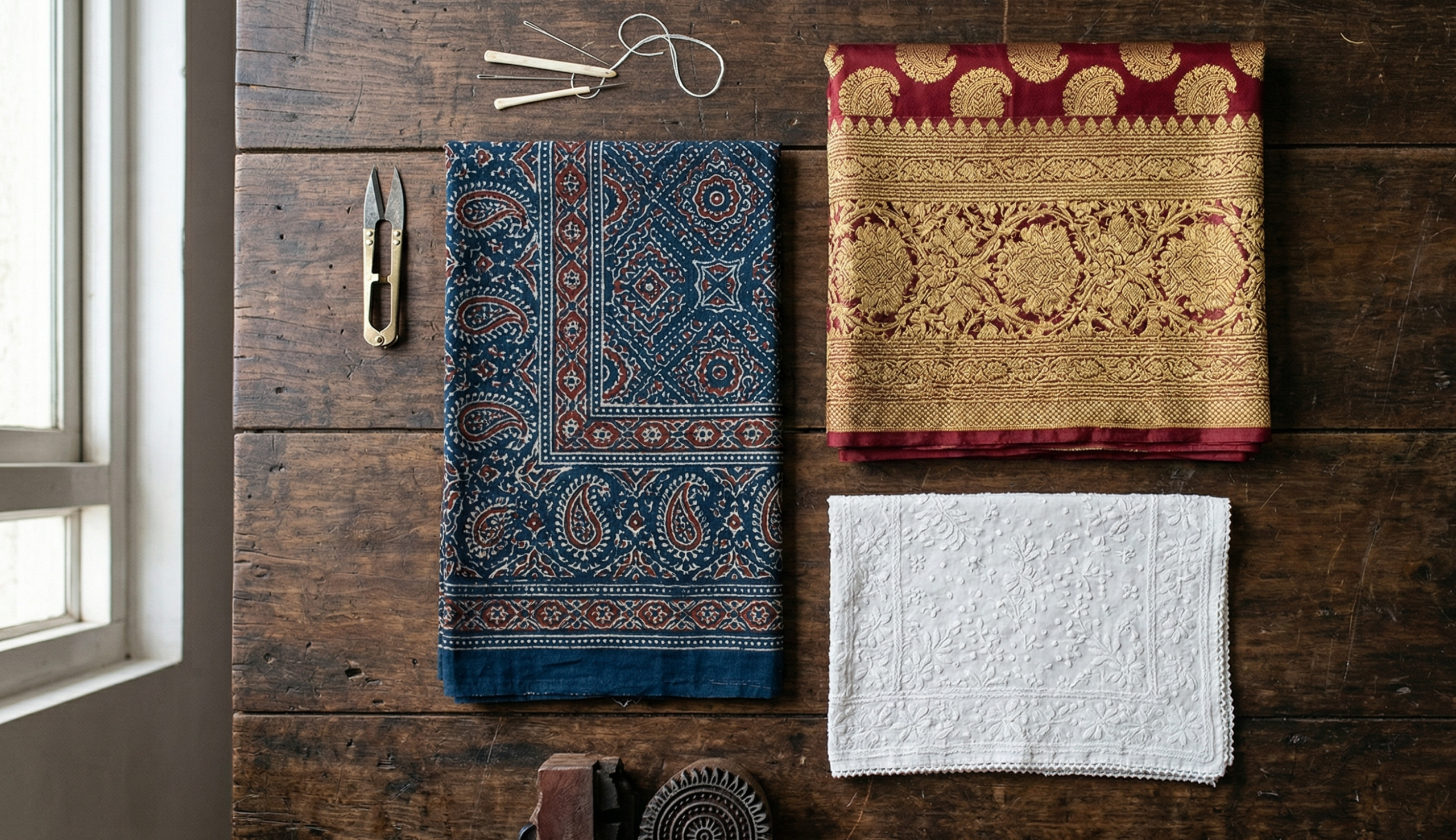
Read more: Cloth That Remembers: How Banarasi, Ajrakh & Chikankari Became Part of India’s IdentityFrom the Mughal courts of Varanasi to the desert sands of Kutch and the refined ‘tehzeeb’ of Lucknow, India’s textiles have never been just fabric they are identity. Explore the 2,000 year legacy of Banarasi silk, the ancient geometry of Ajrakh, and the delicate whispers of Chikankari. In a world of fast fashion, discover why…