
INTRODUCTION– What are we really wearing?
Clothing in India, is unique and carries identity, geography, tradition and time.It is not limited to only elegance and style.An important question emerges:
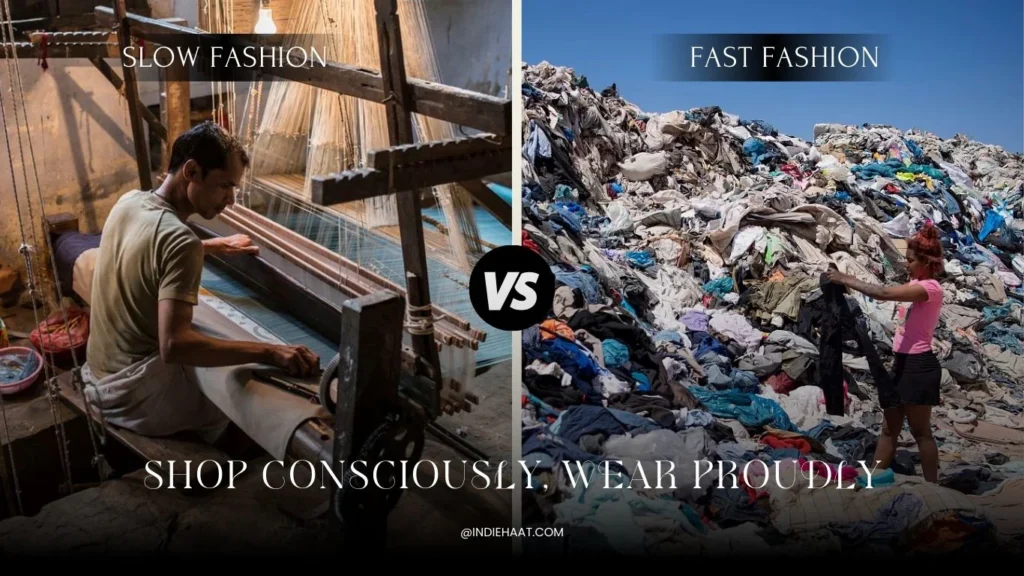
Do we truly understand what we wear- or just how quickly we can replace it?
In India ,slow fashion focuses on high quality, sustainable materials (like khadi)ethical labour and handloom techniques (eg-fabIndia and Anokhi) prioritising durability over trends while fast fashion emphasises on high speed production, trendy synthetic clothing and low costs eg- Zara,H&M).This is not just a comparison of two systems .It is a reflection on value, awareness and responsibility.
Difference between slow fashion vs fast fashion
Fast fashion refers to the high volume low cost business model producing trendy inexpensive clothing rapidly often resulting in poor quality and environmental harm.Fast fashion is what that can be seen in social medias and runways.
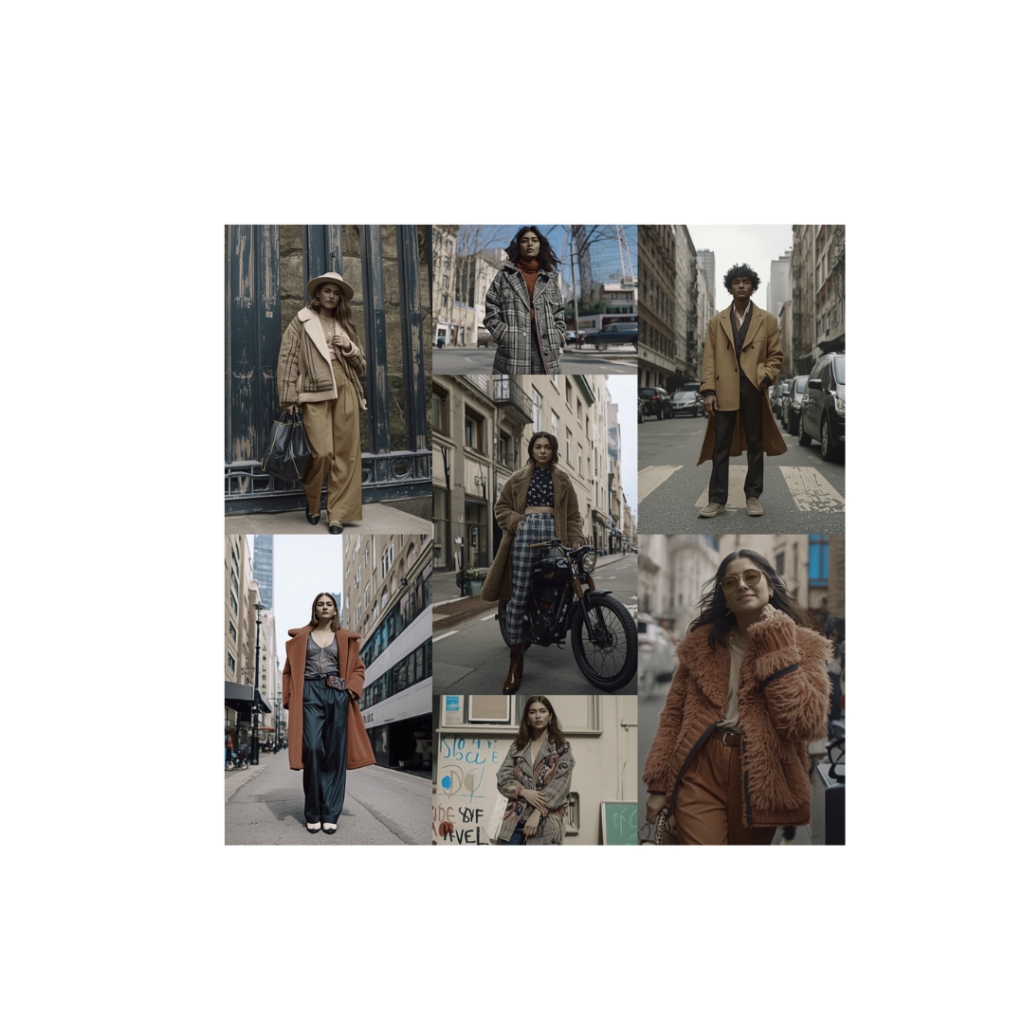
Key characteristics:
1)Mass produced at high speed to mimic runway trends instantly.
2)Harmful to the environment as it uses cheap and synthetic materials like polyester,ascrylic,nylon that degrade quickly.
3)leads to high pollution ,high wastage and significant carbon emissions.
4)often involves unsafe conditions and low wages in developing countries.
Eg- Brands like Zara ,H&M and shein,etc.
What is slow fashion?
Slow fashion on the other hand promotes sustainability, quality craftsmanship, ethical labour, favouring durables, etc.
Key characteristics-
1)Utilizes sustainable high quality and natural fibres (organic cotton linen, hemp wool,designes to last.
2)Eco-friendly methods, reduced waste and lower carbon footprint.
3)Promotes thoughtful, long term consumption and investment in timeless pieces.
4)Companies like Patagonia use sustainable materials and offer repair services.
Slow fashion is deeply embedded with handloom traditions, natural dying techniques and region specific textiles passed through generations.
Buying quality over quantity is a widely recognised principle for a more intentional, sustainable and often more cost effective lifestyle.
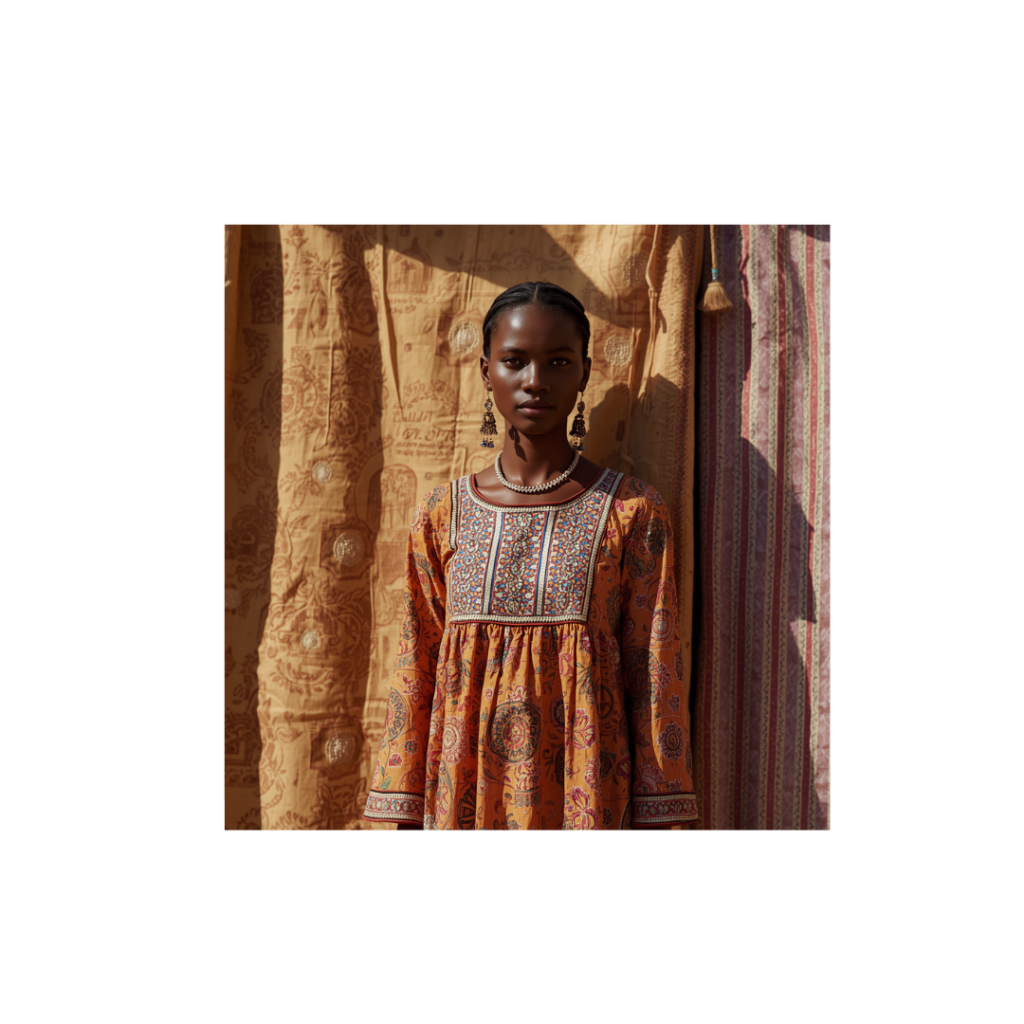
As we know that india is home to one of the worlds richest textile traditions.India”s textile sector,renowed for its heritage craft is struggling to meet the rapid production demands of modern fast fashion.
2)The illusion of affordability
In India fashion stems from the shift away from low-cost exploitative labour towards fair wages ,sustainable practices and premium quality while slow fashion in india now growing in popularity is not only safe to the environment but also reflects higher authentic costs, etc.
3)Environment impact in a high -consumption economy
With a growing population in india,the Indian fashion industry, driven by rapid urbanisation and high consumption economy faces a several environmental crisis.The fashion fashion is growing at a rapid pace in india has contributed to pollution,overprdouction and more consumption.
4)Loss of cultural identity
Fast fashion often promotes global uniformity and recognition as a result local textiles lose visibility, traditional skills decline and cultural narrative fades.Slow fashion preserves artisans livelihood, regional and cultural identity, stories embedded in fabric and cultural preservation, etc.
Why mindful consumption matters
Mindful consumption means buying better quality cloth rather then buying less.It means understanding where your clothing comes from, choosing quality over quantity.etc.
This mindset aligns naturally with traditional values of in india:Longetivity,respect for resources and emotional connection to possession.
Conclusion: choosing what matters
India does not need to adopt slow fashion-it needs to remember it.Every garment carries a story.
The future of fashion in india is not defined by speed but by awareness.The choice it whether we wear it concisely or forget it quickly because what we choose to wear today shapes that remains tomorrow.
Leave a Reply