
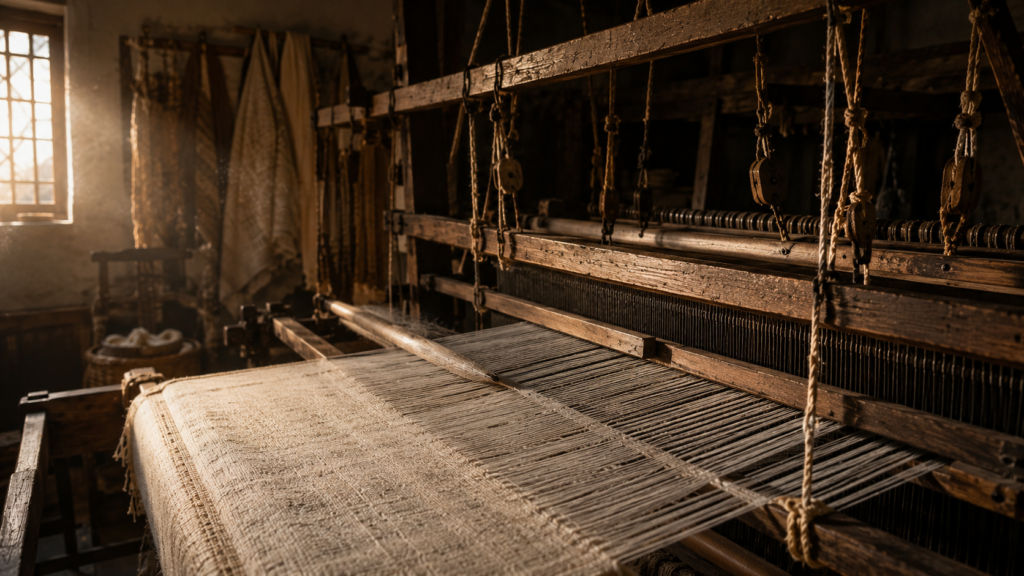
There is something deeply personal about a legal stamp pressed onto the reverse side of a woven fabric. In fact, it carries the exact weight of a human signature. Today, clever power loom imitations increasingly crowd the modern marketplace. Consequently, learning how to decode these small institutional markers becomes your ultimate act of discernment.
How Institutional Marks Protect Weavers
Physical slubs and faint irregularities give handmade cloth its beautiful texture. Beyond these traits, a quiet system of protection works behind the scenes. This framework actively anchors traditional weavers to their geographic regions and legal rights. Ultimately, these official validation marks bridge the wide gap between remote artisan clusters and busy urban wardrobes. By looking for them, you transform the simple act of choosing a garment into an intentional vote for cultural preservation.
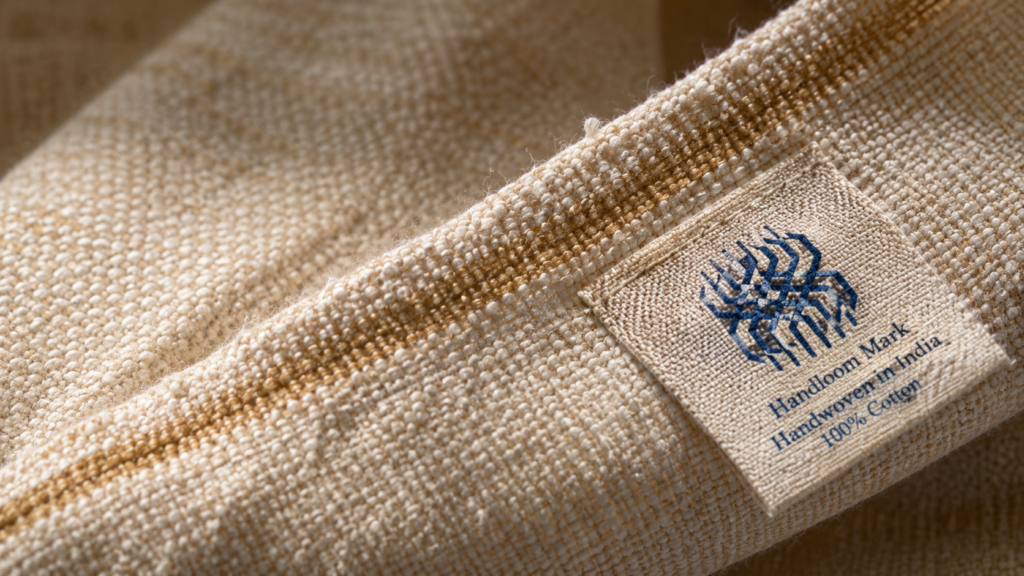
For weaving communities across India, the official Handloom Mark acts as the foundational shield. Specifically, this institutional certification draws a firm line between human artistry and automated machine production. This registered symbol functions as a quiet guarantee. It ensures that a living craftsman guided, interlaced, and beat every single inch of the yarn into place. To achieve this, the artisan relies entirely on manual coordination and inherited skill.
Verifying Authenticity Through Official Standards
Furthermore, the Development Commissioner for Handlooms under the Ministry of Textiles outlines the official technical operational guidelines and implementation policies. Their documentation details exactly how this certification gives you peace of mind. As a result, you can easily verify that the structural density matches the historical standard of the craft.
This explicit proof becomes absolutely essential when a bride-to-be runs her hands over celebratory silks. In this space, synthetic blends and rapid machine duplicates frequently mimic the heavy drape of genuine mulberry yarn. Unfortunately, sellers often hide these imitations under misleading commercial names.

While that mark verifies the physical process of the weave, the Geographical Indication tag steps in to protect the intellectual property of the land itself. A GI tag is an enforceable legal certification proving that a textile carries specific qualities, a distinct reputation, or structural methods that are impossible to replicate outside that single regional microclimate. To truly understand the legal parameters governing these regional protections, you can review the complete catalog of registered textile heritages maintained by the Geographical Indications Registry of India, which showcases how these frameworks keep regional heritages safe from corporate dilution. Whether it is the specialized, iconic architecture of a silk border from a specific southern temple town or the intricate resist-dyeing geometry born in a desert community, finding a genuine GI stamp ensures the working professional is holding a historical record rather than a mass-reproduced derivative.
The Genesis of Fiber Integrity
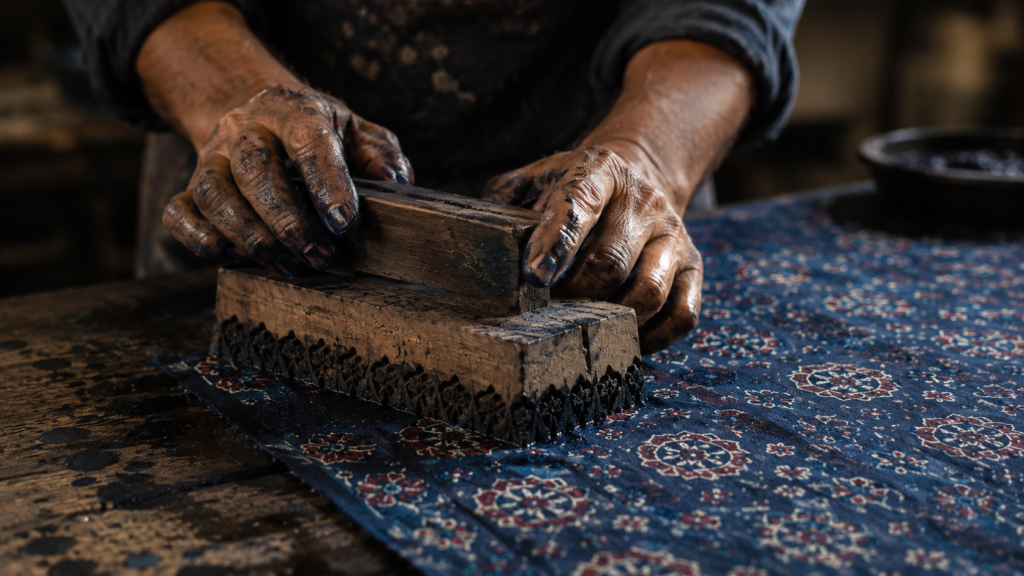
True sustainability within a slow wardrobe demands that we scrutinize the life cycle of the fiber long before it ever encounters a shuttle or a loom. Fortunately, certified fair trade and organic textile labels provide the objective empirical data that guarantees farmers cultivated the raw cotton or wool without chemical degradation. Moreover, these rigorous benchmarks assure consumers that the spinning and dyeing clusters operated under safe, dignified conditions.
Consequently, the global diaspora reader seeking to evaluate authentic craft value from afar can easily track these fastidious global supply chain criteria. By utilizing international verification bodies like the Global Organic Textile Standard, you seamlessly clarify the true cost of human labor. To see how these verified raw materials transition from raw fields into everyday clothing, explore our detailed breakdown on the benefits of wearing handloom fabric to see how they impact your skin and comfort. Ultimately, these certifications offer an honest baseline to calibrate your purchasing decisions. They decisively prove that the deepest worth of an investment piece lies in its absolute transparency.
Becoming Custodians of Textile Heritage
When you actively demand institutional proof, you completely transmute your relationship with the traditional wardrobe. Specifically, this conscious habit elevates you. It transforms you from a casual consumer into an active custodian of an ancestral craft. Far from being mere corporate decorations, these certifications erect vital structural boundaries. These systemic shields actively protect master artisans from economic exploitation. Concurrently, they keep endangered knowledge alive.
Therefore, you must learn to decode these protective emblems with visceral attention. Give them the same focus you use when feeling a raw, textured weave. By doing so, you enlist as an ally in a quiet global movement. This philosophy fiercely respects slow creation and absolute traceability.
Perhaps you want to pair this technical verification with your own personal touch. If so, you can learn the physical signs of production in our comprehensive guide on how to identify quality handloom fabric during your next purchase. In conclusion, a closer inspection of these tiny woven tags reveals a profound reality. The most resilient threads in a garment are invariably the ones that connect us to the truth.
VunaStories #IndianHandloom #TextileEducation #GITagIndia #HandloomMark #SlowFashionIndia #ConsciousConsumer #HeirloomQuality #IdentityThroughFashion #WhereThreadsTellTime
Leave a Reply